



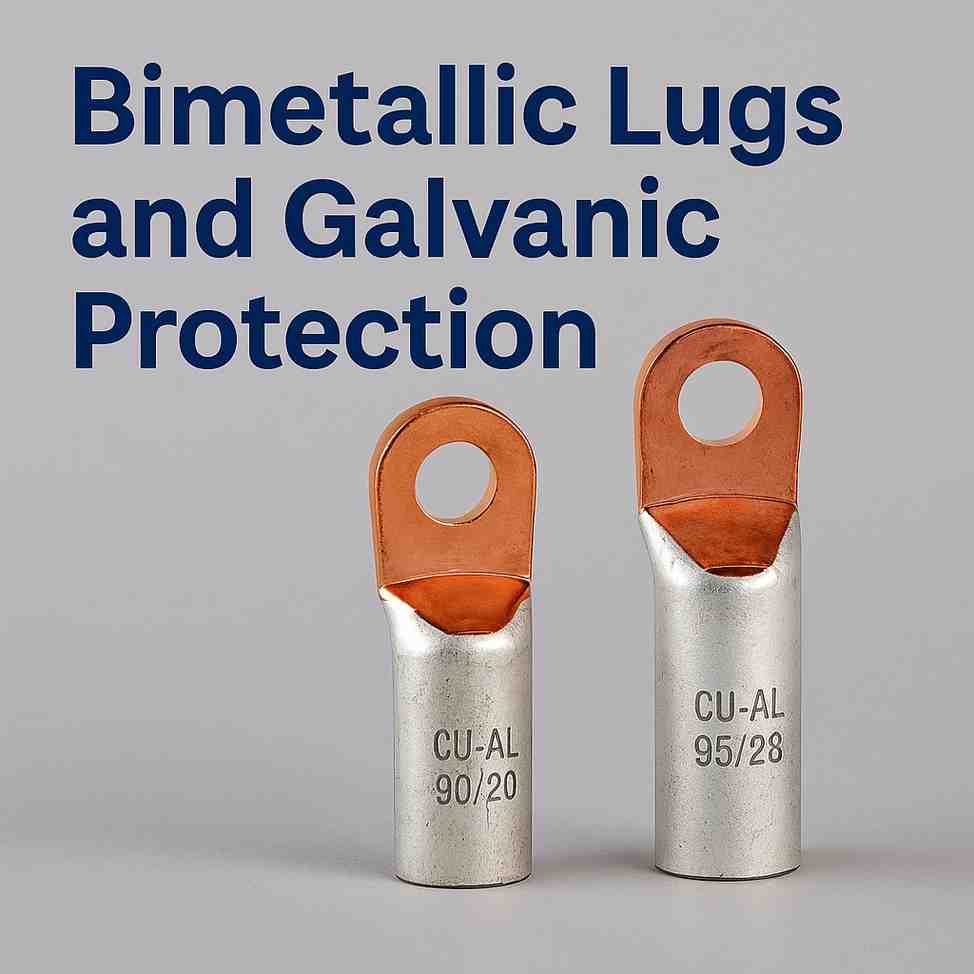
When copper and aluminum conductors meet in an electrical system, a small but critical problem arises — galvanic corrosion. Over time, this electrochemical reaction can weaken connections, increase resistance, and eventually lead to overheating or power loss. The solution lies in a small yet powerful component: bimetallic lugs.
At Ener Industries Pvt. Ltd., we specialize in precision-engineered bimetallic cable lugs designed to create a reliable, corrosion-resistant bridge between dissimilar metals. In this blog, we’ll explore how bimetallic lugs work, their advantages, and how they enhance system durability in industrial applications.
1. The Challenge of Dissimilar Metal Connections
Copper and aluminum are both excellent electrical conductors, but they have different electrochemical potentials. When these metals come in direct contact — especially in humid or corrosive environments — a galvanic reaction begins. The aluminum, being less noble, corrodes faster, resulting in loose connections and voltage drops.
Such corrosion not only impacts electrical efficiency but also poses safety risks in power distribution systems. This problem is common in modern electrical networks where copper busbars often connect with aluminum cables.
2. What Are Bimetallic Lugs?
Bimetallic cable lugs are engineered connectors made from two metals — copper and aluminum — joined using a high-strength friction welding process. The aluminum side connects to the aluminum conductor, while the copper side mates with copper busbars or terminals.
This design ensures:
- Excellent conductivity with minimal resistance.
- Reliable mechanical bonding without galvanic reaction.
- A uniform current flow between two dissimilar metals.
Ener’s precision bimetallic lugs are designed to maintain stable performance even in challenging industrial environments.
3. Galvanic Protection: How It Works
The core advantage of bimetallic lugs lies in their ability to isolate electrochemical interaction between copper and aluminum.
When aluminum and copper come in direct contact, the electrolyte (often moisture in the air) completes an electrical circuit that allows electrons to flow, accelerating corrosion. In a bimetallic lug, the friction-welded interface creates a solid metallurgical bond that prevents this electron exchange.
This process ensures:
- No direct metal-to-metal contact between Cu and Al at the termination point.
- Reduced oxidation and extended component lifespan.
- Consistent electrical efficiency even in outdoor or marine installations.
4. Ener Industries’ Manufacturing Excellence
At Ener Industries Pvt. Ltd., each bimetallic lug is manufactured using advanced friction welding technology — a process that generates heat through controlled friction, permanently bonding copper and aluminum at the molecular level without filler materials.
Quality Features of Ener Bimetallic Lugs
- ETP-grade copper and EC-grade aluminum for maximum conductivity.
- Precise wall thickness for even crimping pressure.
- Tapered entry design to ensure easy cable insertion.
- Optional tin coating for superior corrosion protection.
- 100% mechanical and electrical testing for reliability under load.
Each piece undergoes tensile, thermal cycling, and salt spray testing to meet IS and IEC standards.
5. Industrial Applications of Bimetallic Lugs
Bimetallic lugs are widely used wherever copper and aluminum components coexist within the same electrical system. Common applications include:
- Power distribution panels and substations
- Renewable energy installations (solar, wind)
- Switchgear and motor control centers (MCCs)
- Railway and metro electrification systems
- HVAC and heavy industrial equipment connections
They are especially valuable in regions with high humidity or coastal exposure, where corrosion can rapidly degrade ordinary connections.
6. Benefits of Using Ener’s Bimetallic Lugs
By using Ener’s bimetallic cable lugs, engineers and project owners gain:
- Reliable Cu–Al transition with no galvanic damage.
- Lower maintenance costs due to corrosion resistance.
- Longer system life with minimal thermal loss.
- Improved safety in high-load circuits.
- High mechanical stability under crimping and vibration.
Ener’s design ensures your electrical systems run efficiently — and stay safe — even under extreme environmental and operational conditions.
7. Sustainable and Smart Engineering
Ener Industries is not just focused on connectivity; it’s committed to sustainable engineering. Our manufacturing processes are designed to minimize material waste and energy use while delivering components that enhance electrical efficiency.
By integrating modern materials and precision welding technology, Ener supports the next generation of smart, eco-efficient electrical infrastructure.
Conclusion
When it comes to bridging copper and aluminum conductors, bimetallic lugs are more than a convenience — they are a necessity for performance, safety, and longevity.
With Ener Industries Pvt. Ltd., you get bimetallic lugs built on advanced metallurgy, tested reliability, and proven field performance. Every product reflects our commitment to galvanic protection, mechanical precision, and sustainable innovation.